Sunday, June 10, 2012

The Vessels and Monday Activities

At the beginning of this blog, I purposely had not described the vessels we were using, in order to protect their locations, since they are military vessels.  Since they have now moved on to their next missions or are transiting, I am sharing their photos below. Week 1 was spent aboard the 59-meter hydrographic ship LAPLACE (following these links will take you out of the blog, so you will need to hit the Back button to return). Laplace is beautifully equipped for oceanographic survey and mapping.  Its usual missions are mapping the French coast.

Weeks 2 and 3 have been on the STYX and ANTARES.  STYX is a 41-meter dive support vessel with a team of divers and the US Navy Autonomous Underwater Vehicles we are using for target investigation. This past week, I was based on ANTARES, a 28-meter long vessel whose mission is sonar surveying.  The two ships work together in their missions locating and clearing mines along the French coast. The divers are trained to deactivate the mines – not a job I would want.

LAPLACE


ANTARES


STYX


Monday, June 4

We have spent the past two days transiting from the port of Hull, England, and waiting for the weather to improve. Having done no surveying and having nothing new to report search-wise, this post, like some of the others, will focus on life aboard a French Navy ship.
Today I will attempt to describe the hideousness that is an angry North Sea, particularly when you are on a very small ship that is not meant to work in the deeper waters offshore.  I don’t think there is a single one of us who has escaped feeling the effects of literally being pounded into one wave after the next. The sea state is a "5", meaning there are 20+ knot winds and waves of about 4 meters.  We are tossed about, and two people are feeling so crummy that they are lying down outside on the aft deck. The XO has assigned someone to check on them periodically to make sure they are still with us and did not fall overboard. We are getting our butts kicked by Mother Nature once again, and have no chance of winning.  In my brief check on the status of my team of two (the ones lying out on the deck), another crew member runs out the door to the stern and bends over the rail.  I feel so bad for everyone, as they are not used to working in heavy seas. I feel particularly bad for the cook, who wasn’t well and had to continue producing meals for 25 people, while boiling huge pots of water that sloshed about, and with the smell of food permeating the air. Maybe it’s because I have already been out here for two weeks, but I have been spared the seasickness. I will count my blessings and try to keep everyone's morale up as best I can. 

The forecast for the next two days is not good, with the sea state reaching a "6" (4-6 meter waves and very rough seas) by tomorrow.  We talk about heading inshore to the shelter of Flamborough Head, which we have done on previous expeditions.  It seems like an eternity (only a few hours) until we are granted permission from the British authorities to anchor near the shore for the night.  Our companion vessel, STYX, is about 10 hours behind us in the transit, as they had engine trouble in port and had to wait for the next tide in order to sail.  Based on our terrible transiting experience, they chose the inshore route and had a much more comfortable ride up to Flamborough Head, where they moored next to us for the night.  We will travel together to the survey area in the morning, and hope that conditions allow us to continue the survey.  A good night's sleep should do everyone good.

Friday, June 1, 2012

Wrapping Up Week 2

Our week ended a bit early, with a port call Thursday-Monday, so we are in England for the weekend.  Week 2 did not go as smoothly as the first week, but we managed to get some good work done. The sonar system was down the first three days, but valiant attempts by the crew to repair it paid off, and we covered about 13 nautical miles of seabed.  We do not have any spectacular targets, but there is one that is very intriguing - not in that it's the BHR, but we have no idea what it is.  On the sonar, it appears as two perfect large white rings, almost intertwined, and each one is 12 meters in diameter, and about 3 meters thick.  The sonar experts pronounced it "bizarre."  It is within diving depths, so we may check it out. I could not get a good screen capture of it, but hopefully will this week and will share it with you.

I am feeling a little bruised and battered from fighting the movements of the ship in the swells, and trying to constantly maintain balance, but not always succeeding. My daily commute is transfer by zodiac from one vessel to another in order to watch the sonar data coming in, and then going back to the other ship in the evening to see the results from diving and AUV operations. I'm getting to be an expert at putting on the bulky orange jumpsuit that's needed for protection against cold and waves during the transfers. I continue to be impressed with the efficiency of the French Navy - launching and recovering the zodiac takes about 4 minutes, and they do it several times a day.  The divers operate out of zodiacs as well, and each dive takes 4-6 divers in the boat who each get a ten-minute dive.  It is an easier process than I thought and again, very efficient.

Morale was getting a little lower than normal with the heavy swells and difficulty sleeping, and everyone was working very hard, so....it was time for a barbeque on deck with sausages, lamb chops, pasta salad, melon, appetizers, and ice cream bars for dessert.  The Captain and several crew members from the sonar ship came over to join us as well.


Next week I'll be living on the small sonar ship, since I spent this week on the dive support ship, and I want to get a feel for all operations, and get to know as much of the crew as possible.  This mission is unusual for all involved, because they usually conduct missions for 2-3 days, and stay a lot closer to home in Brest, FR.  It's just another very special aspect of this adventure!


Saturday, May 26, 2012

Phase Two Begins

We begin Part 2 of the survey after a very brief night in port.  It is still beautifully sunny and warm here, so the weather gods are being kind. I hear the vessels we'll be on this week tend to bounce around a bit, so we are keeping our fingers crossed. We end Week 1 with the following stats.  After having noted more than 1100 potential targets, we have narrowed them down (a target can be as simple as a lone boulder on the seabed) and prioritized them according to grades, just like in school.  There are 8 "A" targets, 22 "B" targets, and 45 "C" targets. I do a lot of expectation management, because people tend to get excited thinking that one of the "A" targets has got to be BHR.  But it's all relative, and the "A"s mean that these were the best out of all of the targets, but still may not shout "Shipwreck".  For example, here's an "A".  The horizontal lines, the size, and the object near the bottom are unusual features of the seabed in this area.

Here's a "C" target that's likely a couple of boulders, but still is different than the surrounding seabed.  The blue lines are 10 meters apart and we use them for measuring.

We'll head out this morning to our two ships, have a meeting to get everyone on the same page, and then the crews will be eager to get to work. The ship we used last week has already been in contact and is handing over data to these two who will carry on the mission, so once again it is great to see the communication and organization of the folks involved. I'll post again next weekend and hopefully will have some interesting news from our divers and AUV team.

Thursday, May 24, 2012

Day 3

Things are still going well, and we continue to collect targets from the sonar data.  There is one target that has a magnetic signature associated with it, so we will mark it for further investigation with divers or Autonomous Underwater Vehicles. We spend many hours looking at images of sand and rocks, and it’s a tough call as to whether a target merits additional research or not.  We have had the usual amount of equipment malfunctions, but everything gets repaired quickly.  It is a luxury for us to have an entire team of hydrographers who are used to looking at sonar images, so they do the first review of the data as it’s being generated, choose targets, and we look at the data afterwards to further narrow down the choices. One of the hydrographers created the mission logo below..


There is a crew of about 50 on the ship, including me and three other women who share a room.  It’s difficult to get to know everyone in such a short time, but we are making progress.  Today we were invited to dine with some of the crew in their mess, and they were curious about the mission and what we were finding, so it was good to be able to chat with them and answer their questions.  Tonight we are invited to dine in the Petty Officers’ Wardroom, so this will be another great opportunity to get to know more of the ship’s crew.  It’s an honor for us to be welcomed into the respective ranks.  The favorite question seems to be:  “Did we find the BHR?” and I think they are a bit disappointed when I say that we won’t know that until Phase Two Operations with the divers and AUVs.

Wednesday, May 23, 2012

Day 1


I am having trouble posting photos so that will have to wait for a better internet connection.
Day 1
We arrived on board the ship in the late afternoon, and were shown around the ship, took a few minutes to settle in and get the lay of the land, and were asked to do a presentation to the crew about the BHR Project in the evening.  Normally this would have been fine, but the seas were rolling and we’d not had much chance to get used to it.  Being in a dark, poorly ventilated room did not help.  Fortunately, my colleague, Alexis, and I suffered through and it was a short presentation, but certainly not my best work. I felt bad about this, but in the moment it was about survival and not embarrassing myself.  I was not really looking forward to eating pizza for dinner, but had taken some seasickness medicine and it kicked in by the time dinner was served.  We dine in the wardroom with the Captain and officers, and the conversations cover everything from world events to the Loch Ness Monster.  There is always a few minutes of chatting while we have drinks and appetizers (such as hazelnuts and potato chips) prior to the meal.

The survey started shortly thereafter and in spite of a few glitches with equipment, which the crew repaired quickly; things are going smoothly.

Day 2
We were up until 2:00 a.m. helping to identify any targets that the sonar was detecting in real time, and to make sure the magnetometer was working properly.  The wake-up call, as it’s known, happens at 7:45 a.m. and consists of loud music being played through the public address system, followed by some kind of announcements, so it was a very short night.
I’m not sure, but I think that we may have been enlisted into the French Navy (ha!), as we were given the standard uniform - blue Marine Nationale coveralls, and a foul weather jacket, which is warm and sturdy and meant for places like the North Sea.  The weather is holding and has improved since the cold, raw, dense fog of yesterday.  Supposedly it will be ok all week, and should not impede the survey.
So far we have chosen about 30 targets to further investigate during next week’s mission, and none of them have really screamed “shipwreck.”  We have to keep reminding ourselves that the BHR wreck will not be stereotypical, and most likely will look like part of the landscape.  We are working 24/7 so the sonar and magnetometer are in the water all the time, which means less chances of setbacks from launching and recovering equipment.
We have daily briefings for us and the whole crew, and the Captain has asked that they are delivered in English because the crew needs practice speaking and listening. So every day a different crew member must give his or her part of the presentation.  Sometimes the words they choose are amusing, such as “jumped vegetables” (sautéed vegetables) and “tulips frozen” (ice cream in the shape of a flower).  The Captain is very good at keeping morale high, and last night we played “Name That Tune” before dinner.  This consists of the XO with an ipod playing clips from various songs, and the first person to guess the artist and title wins.  These activities are great for bonding, and although we have been on board only two days, it feels easily like a week, but in a good way, with the camaraderie developing.


Sunday, May 20, 2012

The First Glimpse

It first appears as a tiny speck on the horizon, its color almost blending into the sea and sky so that we're not quite sure if we really saw it or not. We wait a couple of minutes and decide it's definitely getting bigger.  The timing is right, and we keep watching.  Now it is unmistakably a ship, and it's bigger than any other vessel in the tiny, sheltered harbor before us. If this ship were anchored offshore for any length of time, the local fishing boat captains would be taking tourists out to gawk at her (this has actually happened in the past).  But the ship has come for us - she is an impressive beauty who has sailed a very long way from home to play a critical role in the search for the BHR. For me, this first sighting of our vessel is always one of the highlights of a new mission - to know that people believe so strongly in what we're doing that ships have been mobilized on our behalf, and crews are inspired and ready to go. 

We are picked up pierside by a much smaller boat, and enjoy an exhilarating 1-mile ride out to the mother ship, our luggage covered in black garbage bags and computers encased in huge ziploc baggies in the event we should take a wave over the side. Transport by small boat is necessary because of the extreme tidal fluctuations on the east coast of England. There are very few ports where the water is deep enough for a medium-to-large-sized ship to come into port.  Many of the harbors in this area are known as "dry," meaning when the tide goes out, there are boats left sitting in the mud until the tide comes in again and re-floats them, like in this photo. It's nature's version of drydock, and is just one of the many factors we take into account when planning a mission.

Monday, May 14, 2012

There's This Bar...

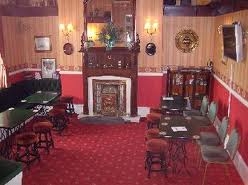
So there is one place in England that I haven't quite been able to get to during all the port calls in the past several years. In the sleepy small town of Filey, which is south of Flamborough Head, there is a bar called Bonhommes.  They brew their own beer and apparently there is a beer named John Paul Jones, and one named Bonhomme Richard. The beer got good reviews from the locals when the bar opened in 2008: “I’ve just had my first batch and it’s gone down a right treat. I’ve been absolutely packed. Filey has been crying out for a local beer for so long. It’s absolutely superb. I really hope it does put us on the map.”  Here's what the bar looks like:

If we can get there this time, I'll certainly post some photos. I think it would be a riot! Not many American tourists go to Filey, so we probably could not be incognito.